
It is a great pleasure to welcome Victor Navone here at PlanIt 3D, Victor is well known in the CG industry for his animation 'Alien Song', featuring his character Blit Wizbok , It went on to achieve massive popularity via the Internet so much so it caught the attention of Pixar, who hired him full time in 2000. His motion picture credits include "Monsters, Inc.", "Finding Nemo", "The Incredibles" and "Cars". First of all how is life treating you Victor is it as busy as usual? Crazy busy. Work at Pixar is heating up, I'm teaching at AnimationMentor.com, I've got a two-year-old daughter and another on the way next year. That is great news, congratulations. Do you find having a young family inspirational to your work? Not directly. I'm sure it's fuelling me in ways that I don't consciously realize yet, but it's also draining me in very tangible ways! I have seen some great success stories coming out of AnimatorMentor.com can you tell us a bit more about it? Animation Mentor is a top-notch animation school, believe it or not. It was founded by animators Carlos Baena and Bobby Beck of Pixar and Shawn Kelly of ILM. All of the mentors are working animation professionals from studios like Pixar, PDI, Sony, Tippett, etc. They guide the students through the18-month program by giving them weekly critiques on their animation exercises and by conversing directly with them through live Q&A's held weekly by web-cam. There's also a new video lecture each week and a robust online forum for students to interact and give feedback on each others' work. It's ideal for teachers and students who otherwise wouldn't have access to animation training facilities. We have students from all around the world. I've had students in Mexico, China, Turkey, and Lebanon, for example. What would a typical production week involve for an Animator at Pixar? We usually have dailies each morning to show our work to the director and get notes, then work until lunch. This may mean going off campus or eating at our own Luxo café. Then back to work, tea time at 3:30pm, perhaps a walk-through review with the director or supervising animators, and work until quit. The intensity of all this will vary based on the current pace of production. On Fridays they show "weeklies" in the main theatre, which is a compilation of all the latest shots that have been approved for film. There's also a beer bash for the employees with free food and drink. The animation department has its own bar and a stage, where sometimes people will play music on Fridays. Have you found the number of productions in the pipeline expand since Disney's acquisition of Pixar? We've definitely grown since the takeover, though I'm not sure the two events are necessarily related. We've always planned on trying to make one feature a year, and we've finally reached a size that will (hopefully) allow us to do that. Do you work around project production deadlines and then take R & R time? Or is it a 9-5 job? Generally I'm 9-5. When production gets in a crunch I will work some more hours. I haven't taken any major leaves of absence or vacation. Just a week here and there. There's always work to be done, whether it's feature animation, short films, or promotional material. What software applications are you using these days? Are you still using Animation Master? At home I haven't had time to do much in 3D. I spend most of my time in Photoshop. Haven't touched Animation: Master in a long time, but I hope to get back into working on my short film someday. At work we use proprietary animation software. Do you work closely with the software development teams? Pretty closely. I've been lucky to be involved in some of the development processes and they're really receptive to my feature requests and bug submissions. What so far has been your greatest achievement at Pixar? Not getting let go after 6 years. Seriously, I came in with very little animation experience and they really gave me a chance to grow. I was lucky to get hired with the small demo reel that I had, and only in the last couple of years have I finally started to feel like I know what I'm doing. I was winging it on intuition for a long time. I'm still learning, which is what I love about my job.
|
|||||

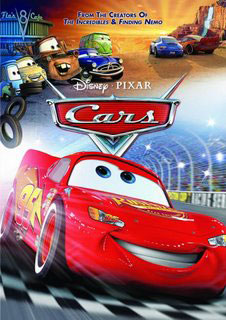
Did you do any 3D modelling and rig your own characters?
No. Animators at Pixar just animate.
How much compositing is used to construct the final scene?
I couldn't tell you. Not my department.
Do you prefer to work on humans, animals or object characters (as in Cars)?
I like variety. Humans are fun, but definitely the most challenging.
Working with a very limited rig like a car can be a refreshing change. I haven't really done any animals yet (I'm not on Ratatouille yet).
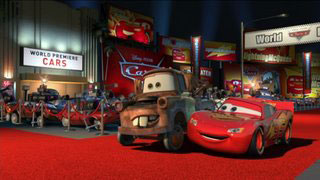
Which area of CG animation do you thing has advanced the most in the last few years?
Lighting and effects (hair, water, cloth, etc.). Our animation rigs have gotten a lot better, too.
How have the animation rigs improved?
We've got better controls for shaping the characters in graphic ways to try to get the feel of 2D animation. We can squash, stretch, bend and bow just about any body part.
Do you also use morph targets?
Not really. We tend to build all our facial shapes with individual controls.
I know you study animation from bygone eras right through to the present. Do you think we can learn from some of the earlier works, or are we now into a completely new era of animation?
Yes and yes. There's still a lot we can learn from the past masters, such as Disney's 9 Old Men, but there is also a lot of potential unique to CG animation that we have yet to explore. I hope to see future features and shorts explore the possibilities, rather than always trying to become more realistic.
Are there any independent animations by up and coming artists that you really like?
I really like the short "Burning Safari" produced by some students at Gobelins in France.
Do you think CG actors will replace "real" actors in the future or do we love to read about them in the gossip columns too much?
No way. We want to see our own species on the screen. It's biological narcissism.
I know you completed your first project as a Director this year (commercial for State Farm). How was that for you?
That was a blast. I really enjoyed being able to participate in all parts of the production, especially lighting, where I have the least experience. It was very educational. I hope to have the chance to do it again in the future.
What did you mainly learn about lighting?
How to use light to direct the viewer's eye to the important part of the shot, and how to use color and contrast for emphasis and emotion.
Is Directing a role you would like to take on more in the future?
Sure, in small doses. Commercials and shorts are appealing to me, but I would never want to direct a feature. I think it would be too taxing on my life and family.
Okay I had to ask this one where is Blit Wizbok these days? He must be nearly eight years old now?
He's sleeping on my hard drive somewhere. We don't talk much anymore.

With work and a young family at home. Do you have much, if any spare time for personal animation projects these days?
Very little. I have so much I want to do and so little time. I've started drawing more because it gives me instant gratification.
You have always made yourself very accessible to folks via the internet. It is appreciated I know by many in the CG community and fans of the films you have worked on. Why do you think it is such an important medium and what role do you think sites like P3D have to play in the development of CG artwork and animation.
I think the internet has vast educational potential for all art forms. We can access information and individuals in the field of our interest like never before, and we can get exposure to those who may be interested in our talents. I like to teach but my work and personal situation would make it difficult for me to teach in a traditional class room. Thanks to the internet I can share my knowledge via my blog and AnimationMentor.com. I don't know about the potential for films to be developed over the internet; I think face to face interaction still plays an important role in creating compelling art.
You also spend a lot of your time appearing as a guest speaker at conferences and more recently on TV interviews. I know from personal experience that standing up in front of hundreds of people can be nerve racking. Is it something you enjoy and find a natural thing to do or is it more of a challenge?
I'm pretty comfortable in front of groups. I guess that makes me an exhibitionist. As long as I'm prepared and I know what I'm talking about I don't really get scared.
There are many studios that aspiring artists and animators would like to work at and Pixar is one of those at the top of every list. Is it as glamorous and fun environment as many imagine? I would guess not all the time.
I think Pixar is probably the best place for an animator to work. It's as fun and creative as working for a large studio can be, and you get to work on great movies with passionate directors. It's still a lot of hard work, though.
There are many different areas of specialisation in CG motion picture, is there one area of specialisation that you would recommend as being a good springboard into the industry?
Hard to say; I think there's a lot of competition all around. I say to specialize in whatever you're best at and enjoy the most. It's good to have secondary skills too, though most large studios don't hire generalists.
We have to ask what advice you would give to those wanting to work in CG film industry.
Be patient, be willing to work your way up. Having a good portfolio is important, but you also have to be able to work well with a team and give good interviews.
Being able to work as part of the team is great advice, do you find that is one of the greatest challenges for animators who are used to working on their own.
It depends on their personality. Some animators work best alone, and that's exactly what they should do. Not every animator is meant to be part of a large studio production. I like to see what individual animators and small studios can come up with too. It's all about finding your ideal fit.
So as we get closer to closing out 2006. What was this years highlight? And next year what do you hope to achieve?
I'm really enjoying working on Andrew Stanton's next film. I got on board early so I'm able to help develop the characters and have a greater impact on the film than any previous one I've worked on. It's a fantastic story, too, and it's unlike anything that's been done in feature animation so far.
I wish I could tell you more!
Victor thank you for taking time out of your busy schedule to spend some time with us. We look forward very much in seeing your next project at the cinemas very soon.
Copyright 2006, PlanIt 3D